For people taking a GLP-1 medication
Eating well on a GLP-1 medication with CosMeal
For people who take a GLP-1 medication: how to keep your protein up, track calories and log smaller meals. While CosMeal is a food app, we want to remind individuals on GLP-1 medication how important it is to minimize muscle loss by including strength/resistance training.
Who this guide is for
This guide is for people who take a GLP-1 medication, such as semaglutide (Ozempic/Wegovy/Rybelsus) or tirzepatide (Mounjaro/Zepbound). These medicines quiet your appetite and slow how fast your stomach empties, so you eat less. With less food on your plate, what you eat matters more.
CosMeal won't suggest changes in medication or dosage, but it will show you what you eat: protein, calories, carbs and fat, meal by meal.
Why protein matters now
When you lose weight, you lose some muscle along with fat. In the STEP 1 trial of semaglutide, about 38% of the weight people lost was lean mass, which includes muscle. Muscle keeps you strong, and it is where your body burns much of the sugar in your blood.
Two things help protect it: enough protein, and strength/resistance training. BC Diabetes suggests about 1.2 to 1.5 g of protein per kilogram of body weight a day, with protein eaten first at every meal. A 2025 joint advisory from four obesity and nutrition societies adds strength training at least 3 times a week, plus at least 150 minutes of moderate activity.
Set your goals: Build muscle, Lose fat and Carb smart
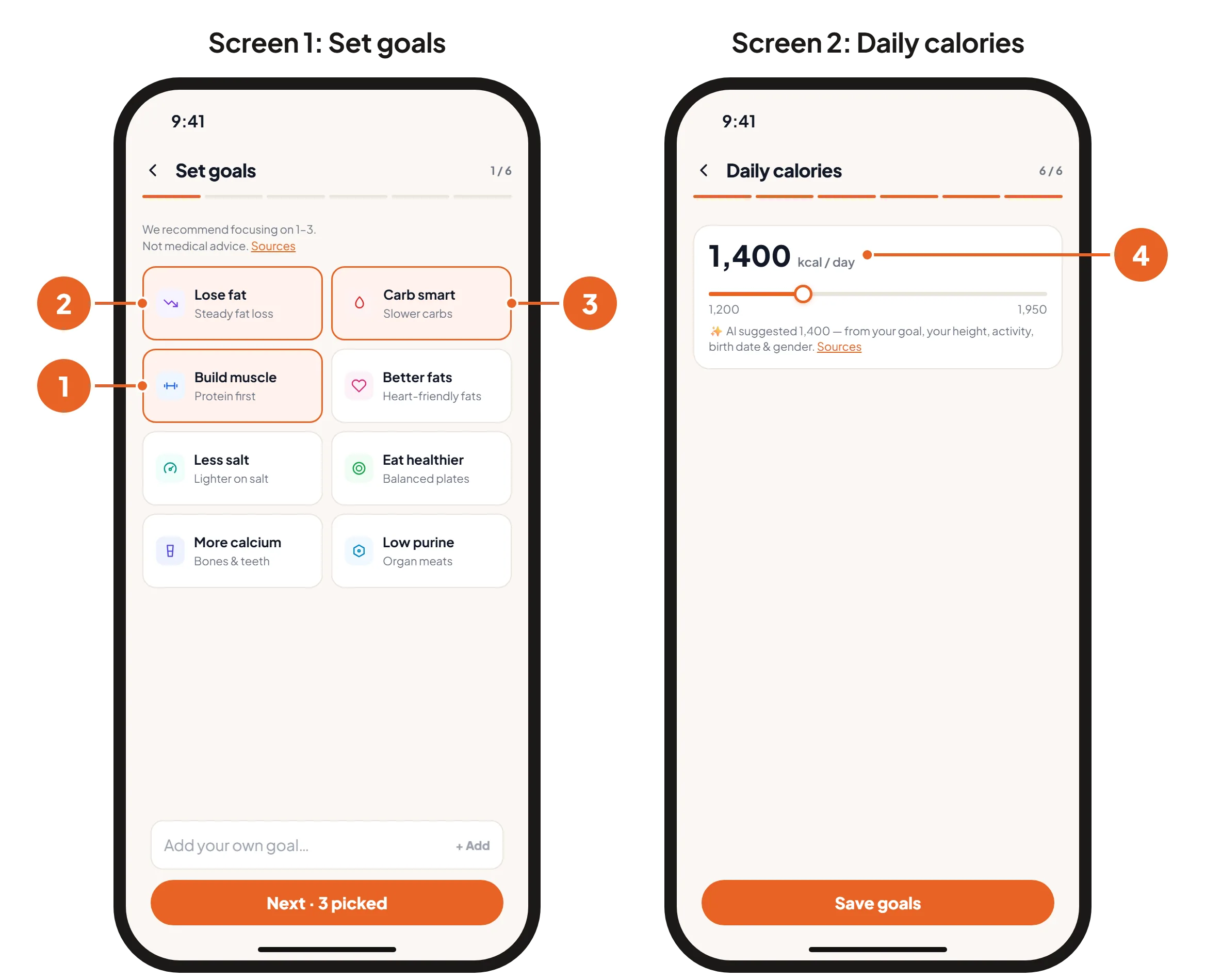
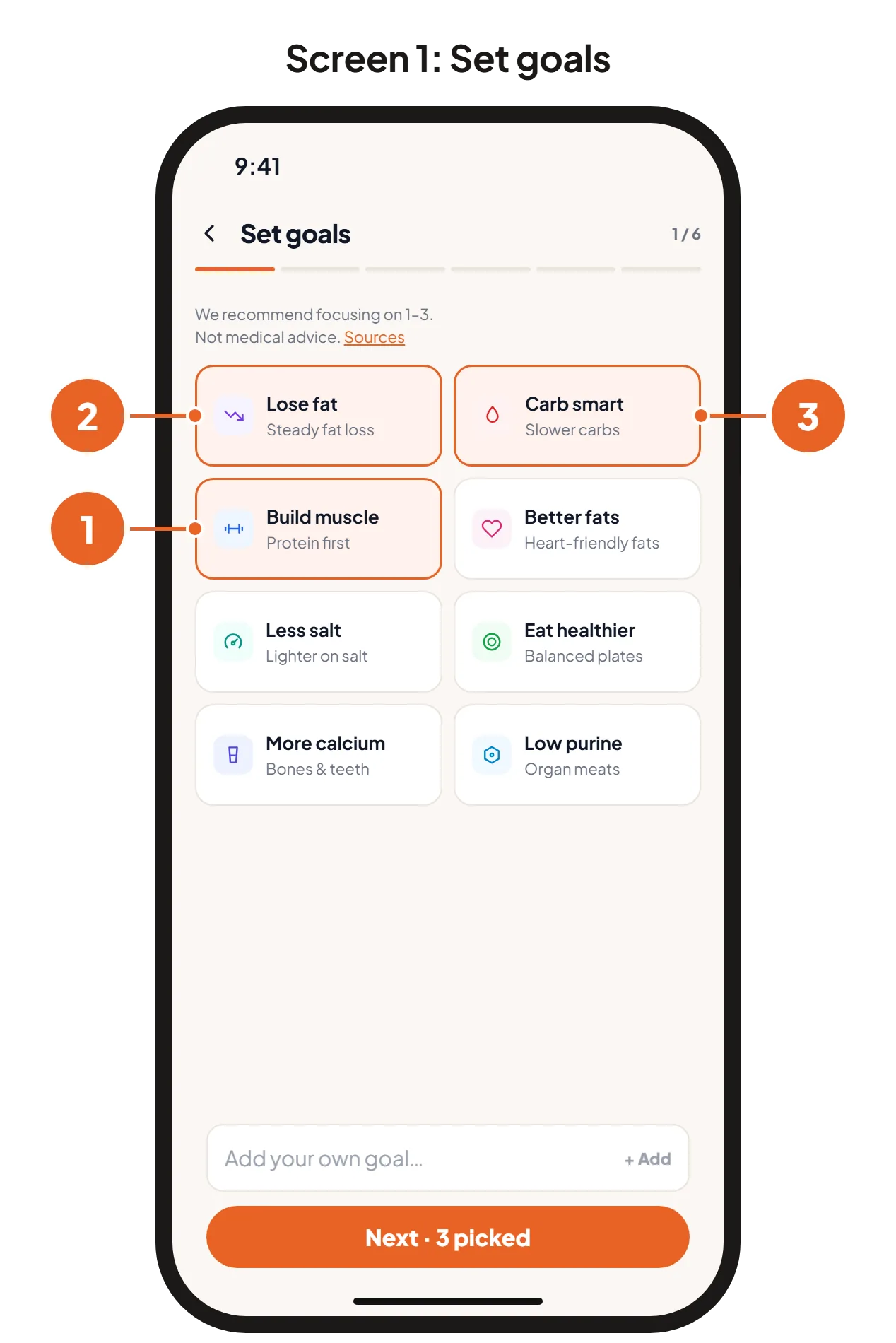
In CosMeal, tap Adjust goals on the Insight page, or Goals & calorie target in the Profile tab. Two goals suit most people on a GLP-1:
- Build muscle (Protein first): the app looks for protein in your meals, and the meal planner puts a real protein in every meal.
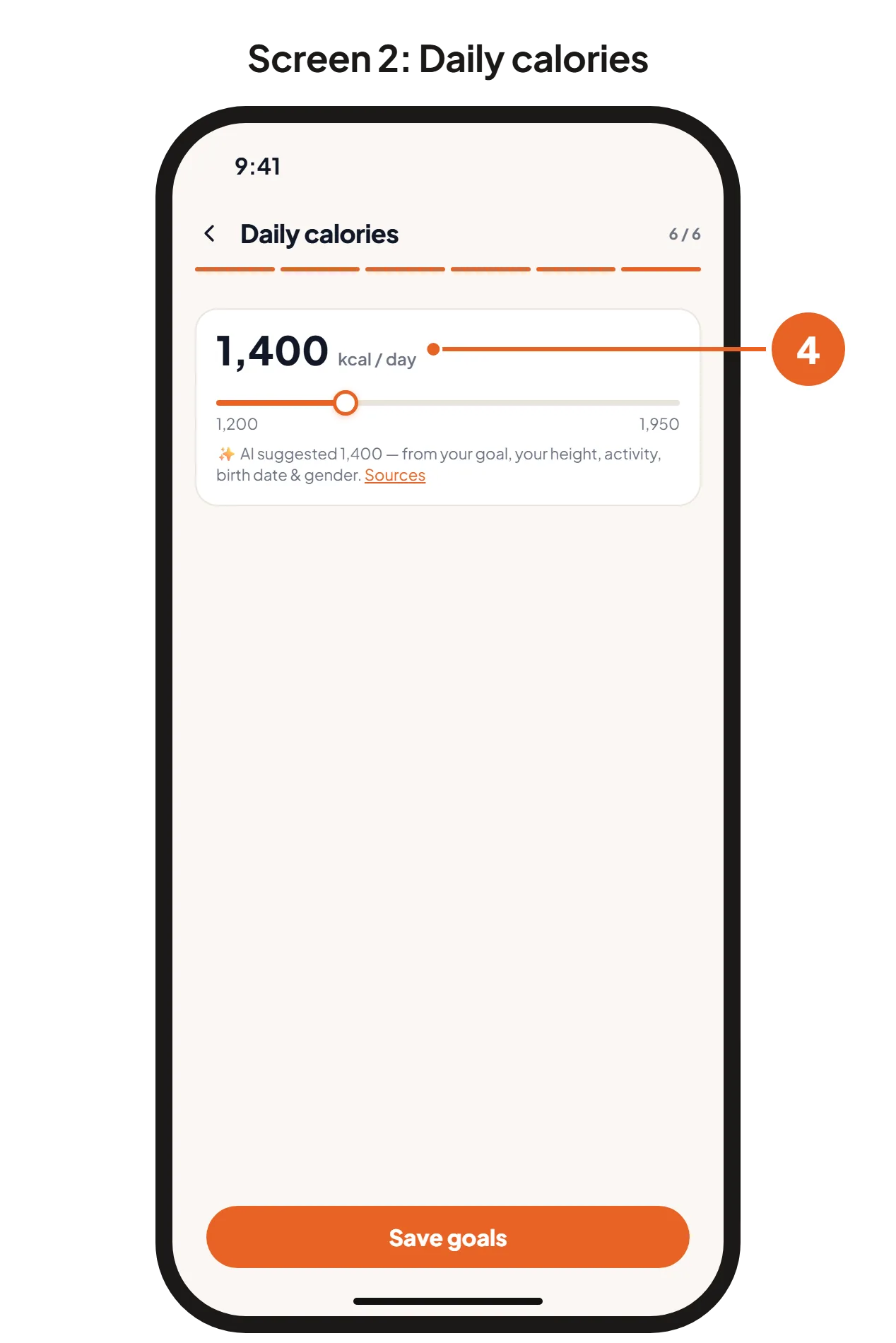
- Lose fat (Steady fat loss): the only goal that sets a daily calorie target. You choose a goal weight and a pace: Gentle, Steady or Ambitious, that is 0.25, 0.5 or 0.75 kg a week, never more than 1% of your body weight a week.
If you also want to be careful with carbs, add a third:
- Carb smart (Slower carbs): helps you be careful with carbs, which affect your blood sugar. Each week it looks at meals with vegetables and protein together, carb-heavy meals, sweet drinks and desserts, and whole or slower staples, and the meal planner picks lower-carb dishes.
One of them is your Main goal: it settles things when goals pull different ways. You can change your goals any time, and the week is scored again on the spot.
Your calorie target
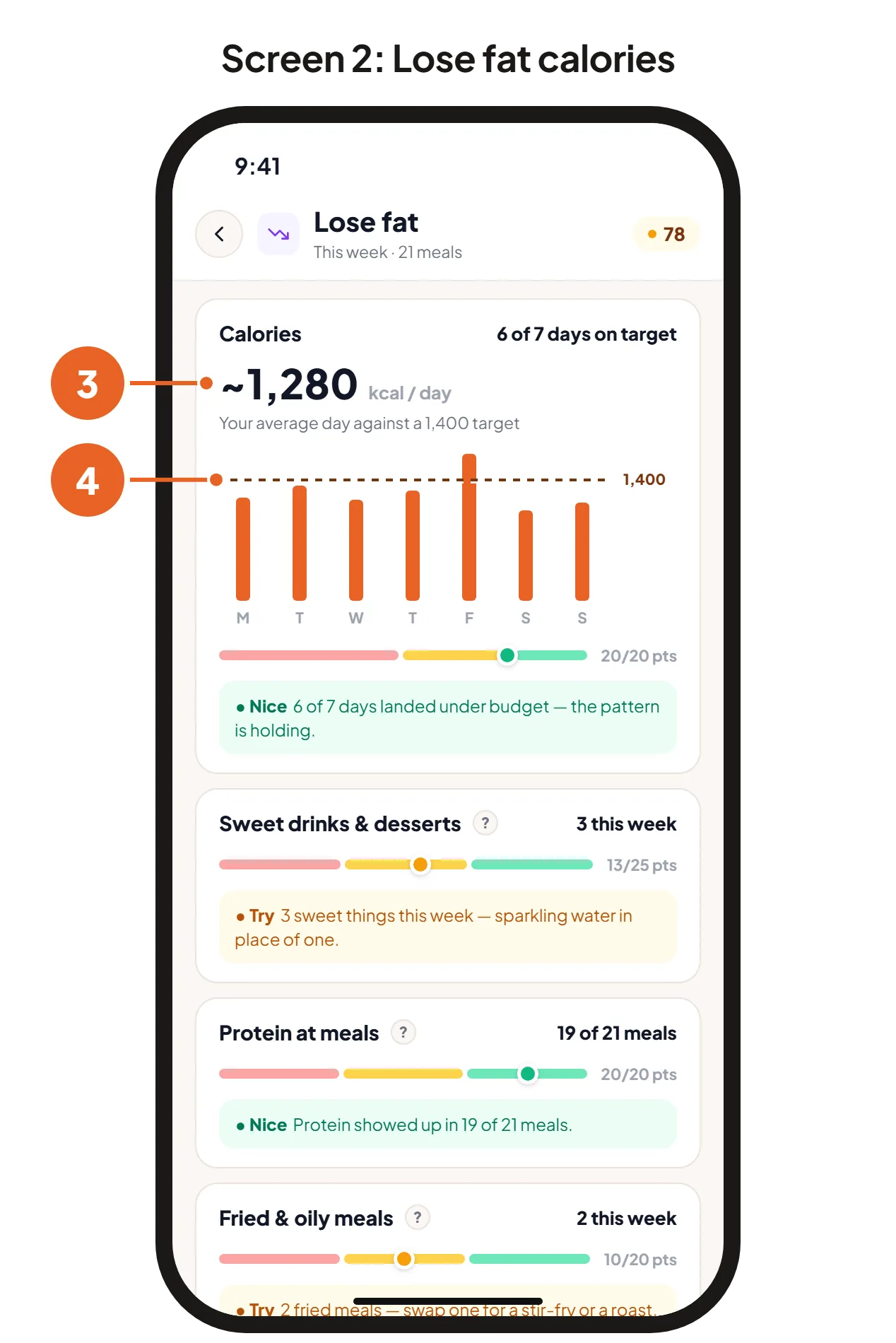
With Lose fat, CosMeal suggests your daily calories from your height, weight, age, sex and activity, using the Mifflin-St Jeor formula, minus enough for your pace. It never suggests less than 1,200 kcal a day for women or 1,500 for men, and you can move the slider.
On a GLP-1, you may often eat well under your target without trying. Treat it as a ceiling, not a number to reach. If you are often far below it, or can't eat enough protein, tell your care team: eating too little makes it hard to get the protein and nutrients you need.
What Insight checks each week
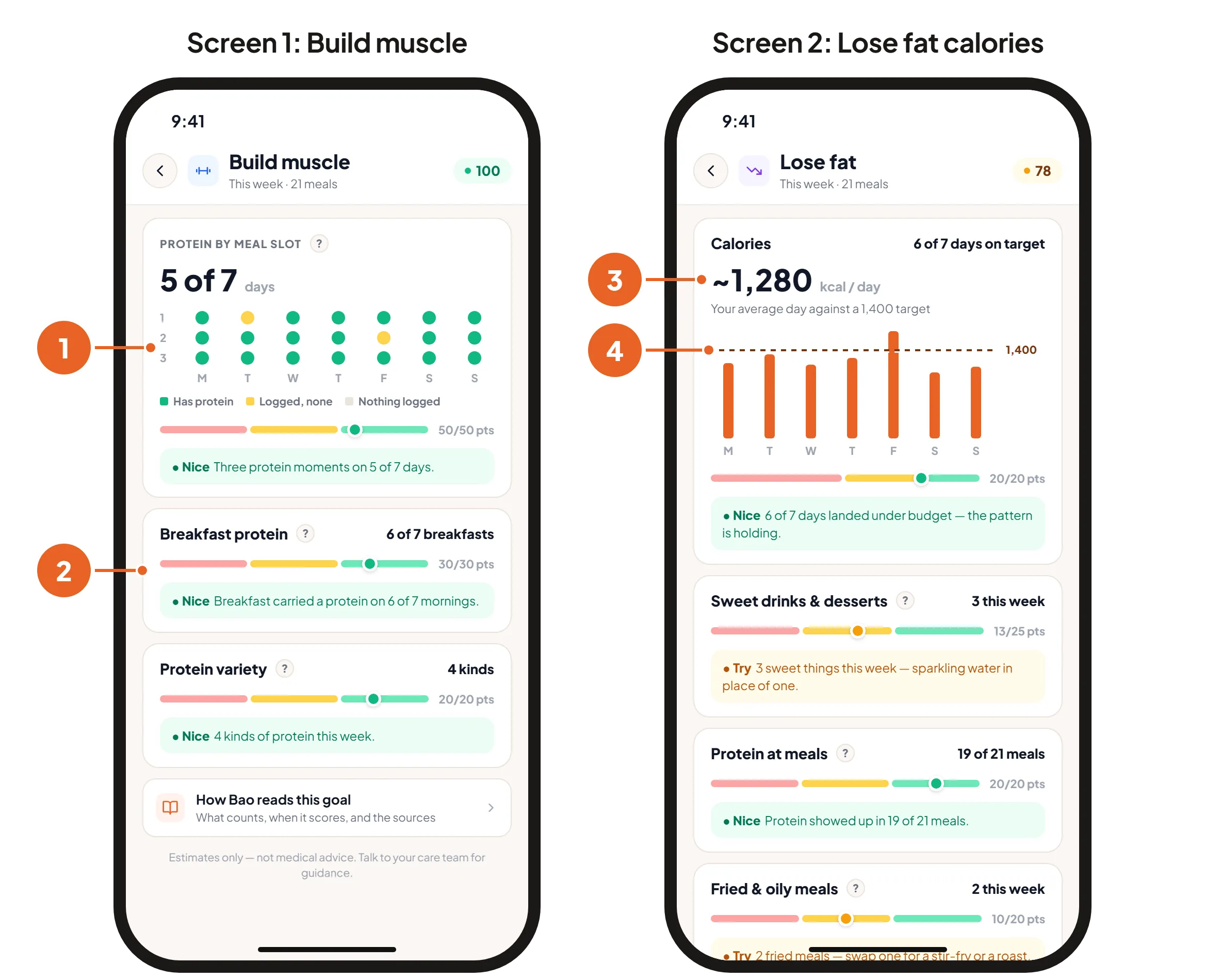
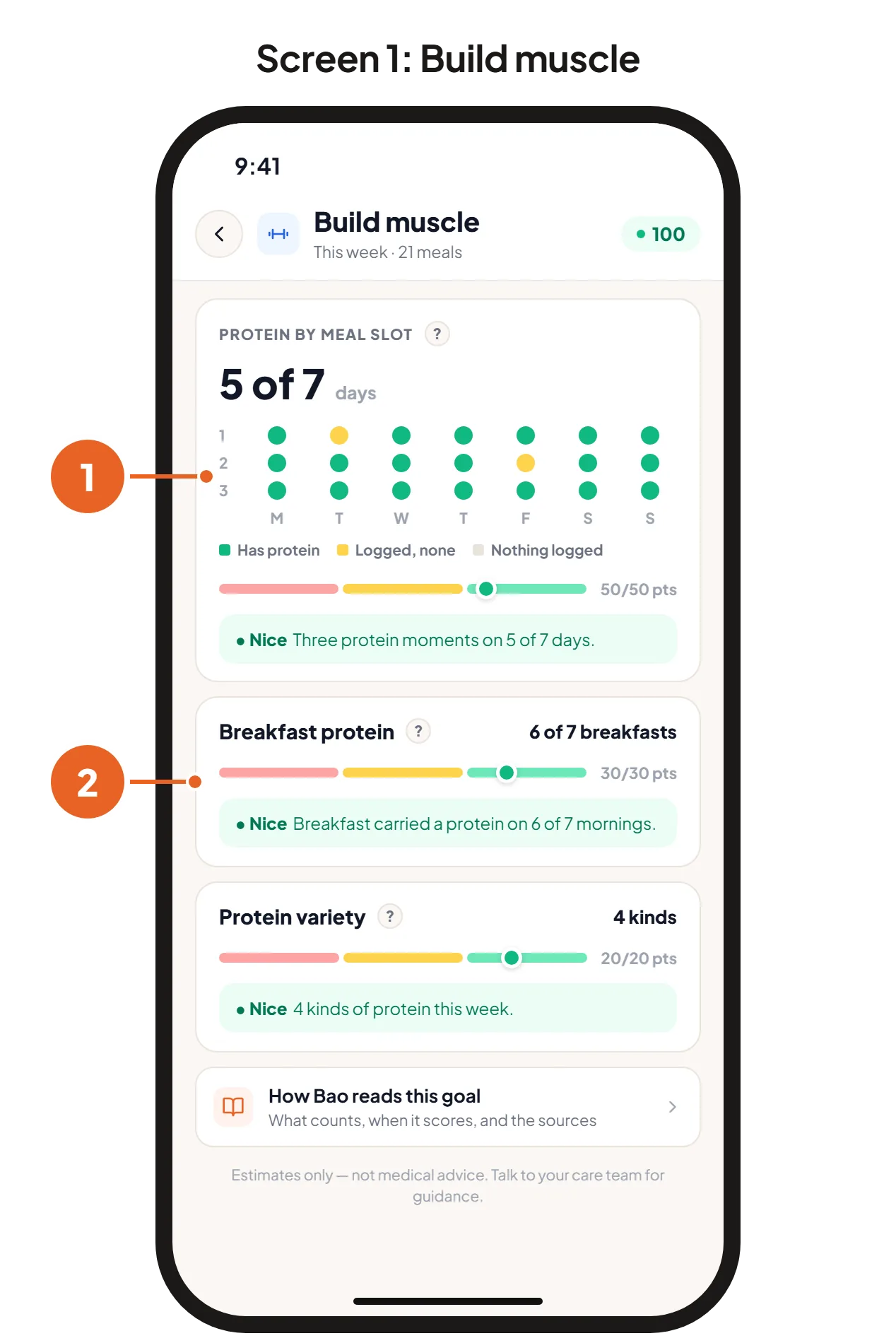
Build muscle looks at 3 things in your logs: days with protein at 3 or more meals or snacks, breakfasts with protein, and how many kinds of protein you ate. It checks that protein is there, not how many grams, which fits the advice to eat protein first at every meal.
Lose fat shows your average day against your calorie target, and counts the days you stayed at or under it. Up to 10% over still counts.
Count the grams
Log what you eat with a photo and a short note: what it is, and how much you ate.
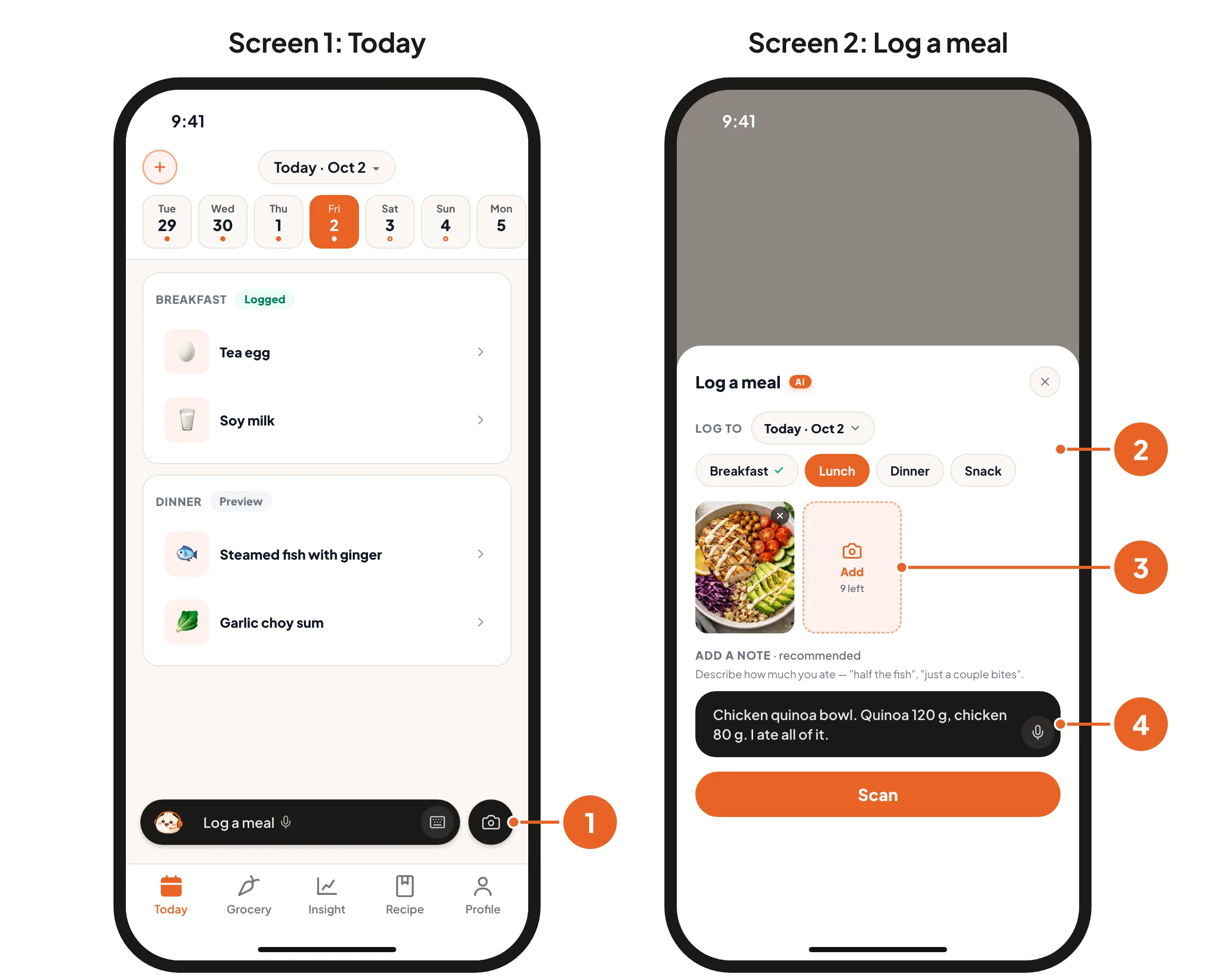
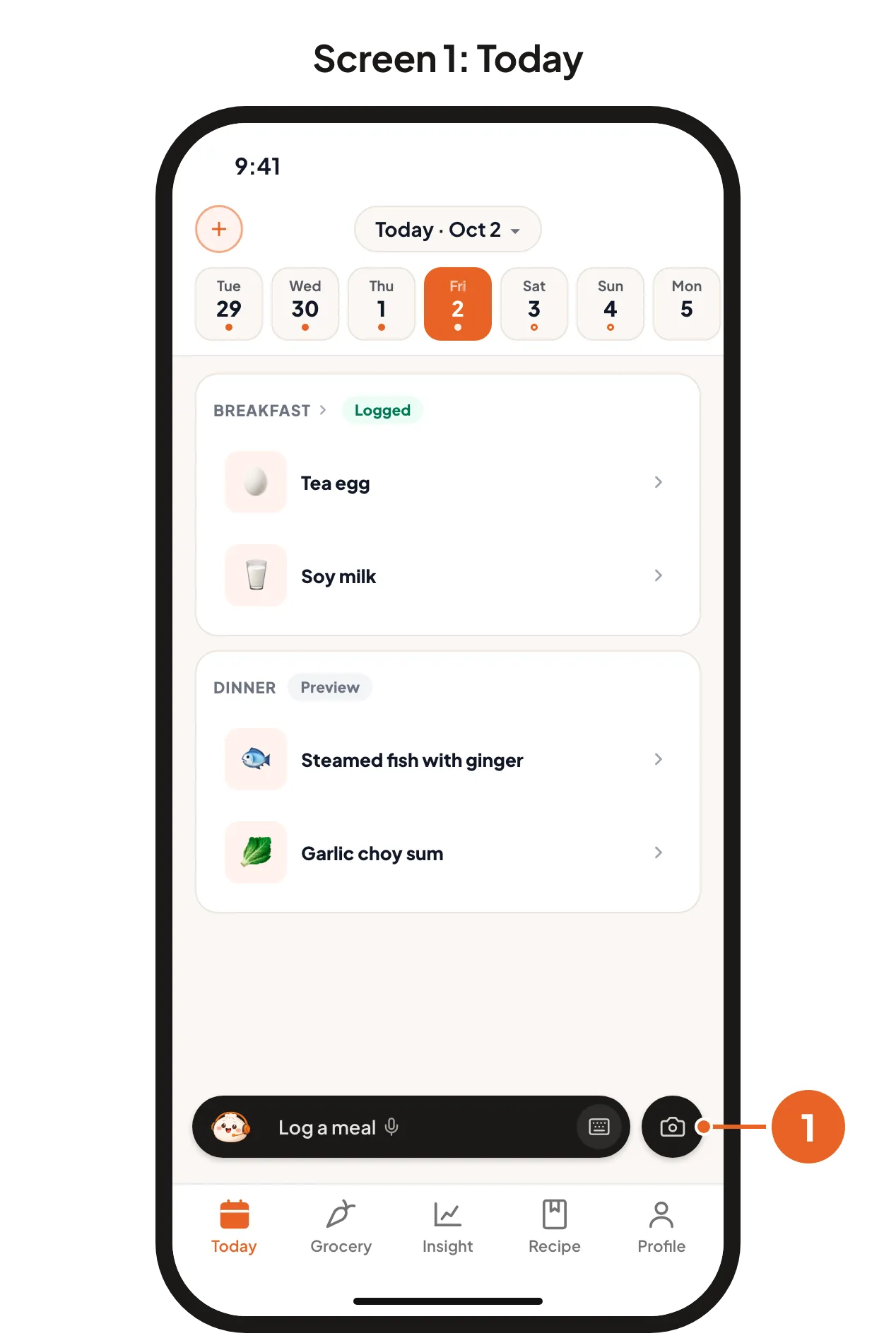
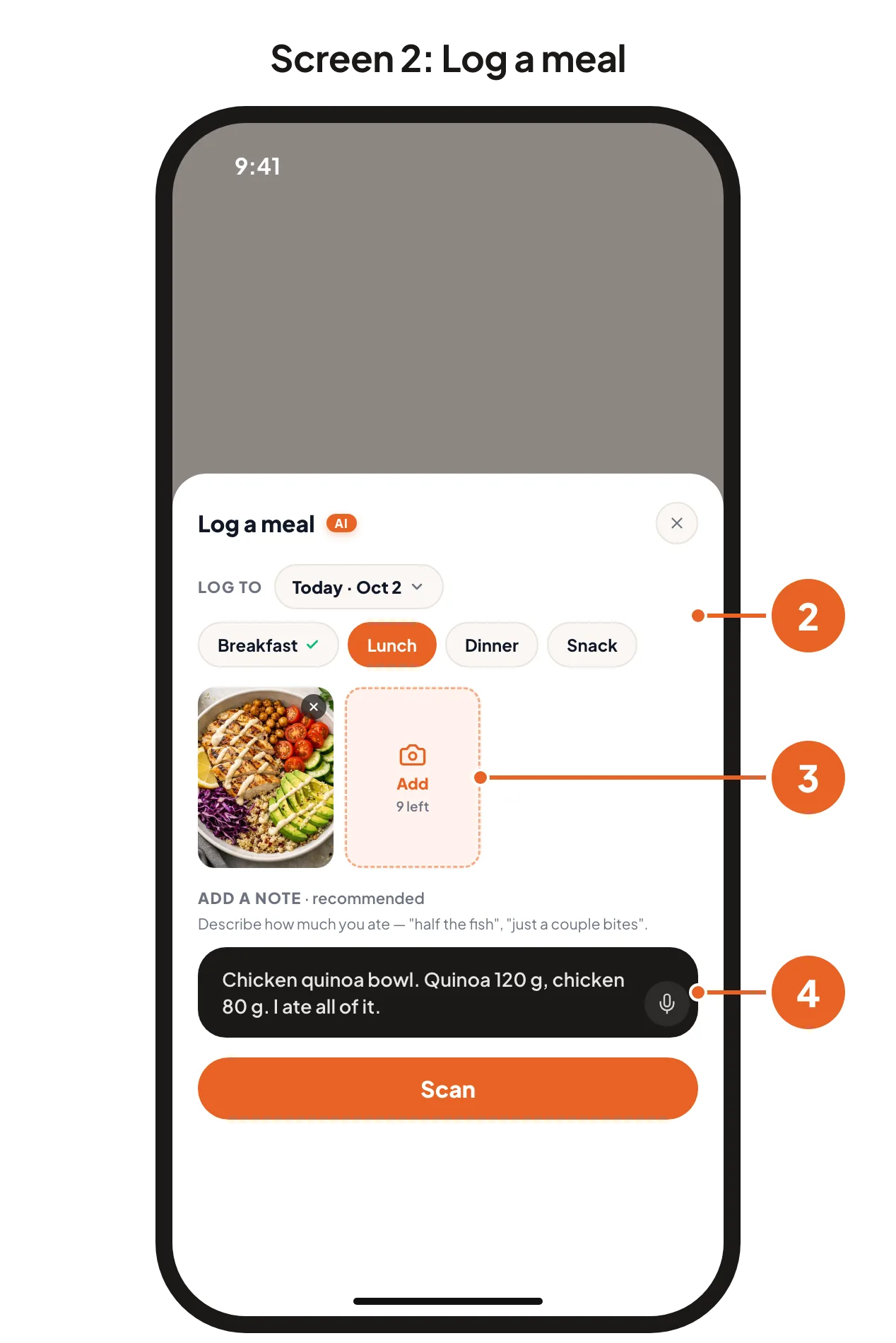
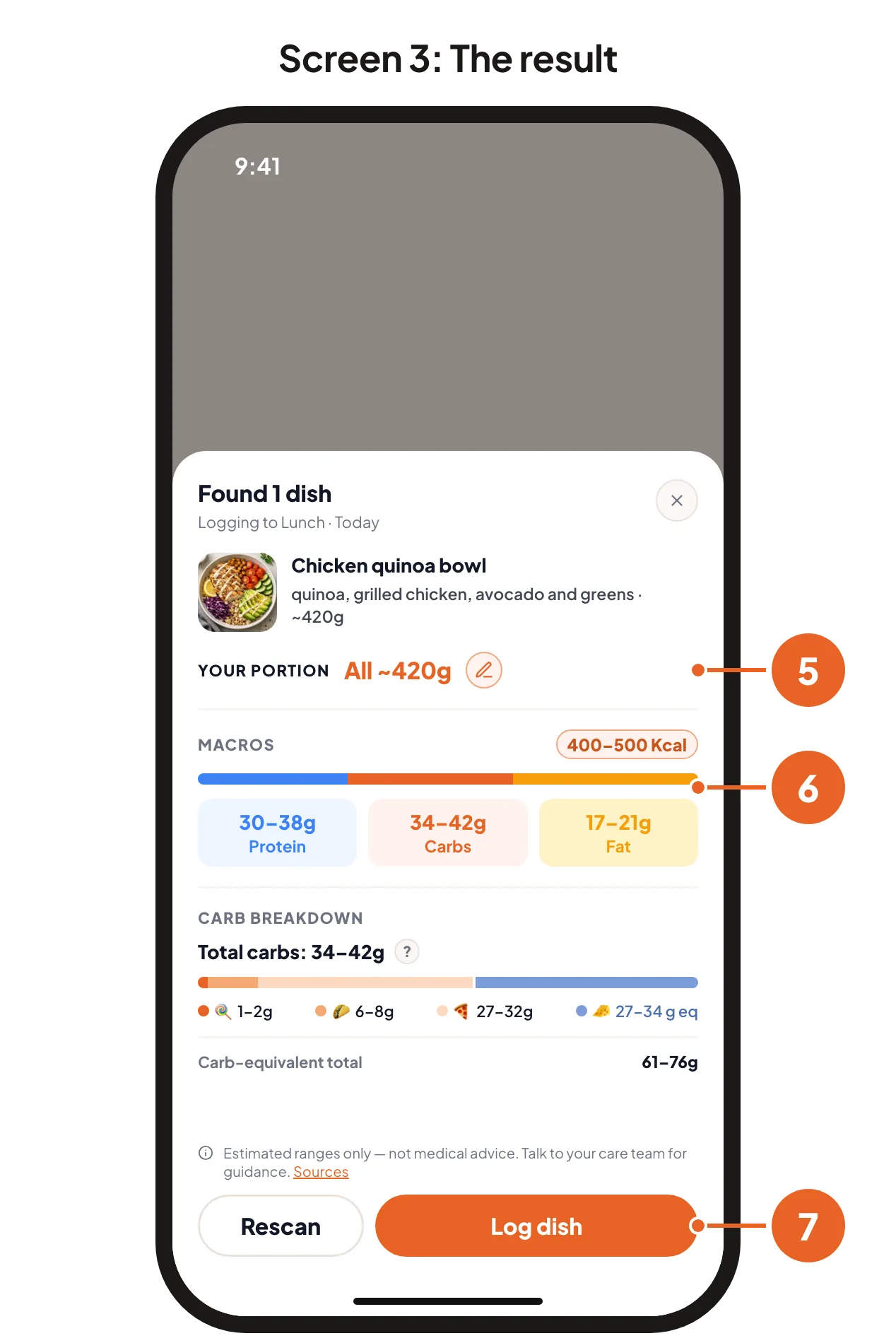
Every dish you log shows its protein in grams, next to carbs, fat and calories, and the carb breakdown. For the whole day, ask Baobao, the app's AI assistant in the bar at the bottom of Today: “How much protein did I eat today?” It adds up what you logged.
Then compare it with the number your care team gave you. Like every number in CosMeal, it is an estimate, and it is only as complete as your logs.
Log smaller meals
Many people on a GLP-1 eat 5 or 6 small meals instead of 3 large ones. Log each one, as a meal or as a snack, so your protein and calories add up.
If you ate only part of a dish, tap the pencil next to Your portion and pick ¼, ½ or ¾, or say it in the note: “ate half”.
Plan meals that fit
If you use meal planning, your goals shape the plan: Build muscle puts a real protein in every meal, Lose fat keeps meals lighter and protein-forward, and Carb smart picks lower-carb dishes. In the planner's last step, Anything else, add what helps you, for example “small portions, protein first, nothing greasy”.
Habits that help
- Eat slowly, and stop before you feel full: the full feeling keeps growing for a few minutes after you stop.
- Go easy on greasy, fried and very sweet foods. They can make nausea worse.
- Get 25 to 35 g of fiber a day, from foods like berries, oats and beans, to help with constipation.
- Drink 1 to 2 liters of fluid a day. These medicines can quiet your thirst as well as your hunger.
- Limit alcohol. It can make stomach side effects worse and raise the risk of low blood sugar, especially if you also take insulin or another medicine that can cause lows.
When to talk to your care team
- You often eat far less than your calorie target, or can't reach your protein.
- Nausea, vomiting or diarrhea keep you from eating or drinking.
- You have lows, especially if you also take insulin or another medicine that can cause them.
- You lose weight faster than planned, or feel weak.
Sources
- BC Diabetes. Dietary recommendations with GLP-1s: best practices.
- Mozaffarian D, et al. Nutritional priorities to support GLP-1 therapy for obesity: a joint advisory from the American College of Lifestyle Medicine, the American Society for Nutrition, the Obesity Medicine Association, and The Obesity Society. Obesity. 2025;33(8):1475–1503.
- Wilding JPH, et al. Once-weekly semaglutide in adults with overweight or obesity. N Engl J Med. 2021;384(11):989–1002.
- Mifflin MD, et al. A new predictive equation for resting energy expenditure in healthy individuals. Am J Clin Nutr. 1990;51(2):241–247.